
The Imperative of Cloud Modernisation in the Age of AI
As organisations navigate the rapidly evolving landscape of Technology, the importance of cloud modernisation has never been more apparent. Benchmark research conducted by The Blue Hour – Research on behalf of Rackspace Technology underscores the necessity of modernising platform applications and data to harness the full potential of AI and other advanced technologies.
The shift to cloud computing has revolutionised IT infrastructure, compelling businesses to adopt more agile and scalable environments. According to the report, 40% of workloads are currently in the cloud, with projections to increase to 60+% within two years. This transition underscores a clear trend: companies are prioritizing cloud adoption to meet the demands of a dynamic market. However, this migration is not without its challenges. A significant 60% of organizations reported cost overruns as their biggest hurdle, followed by security and compliance risks (55%).
Despite these challenges, cloud modernisation is non-negotiable, especially when considering the role of AI. Half of the respondents believe that modernising legacy applications and data systems is essential to fully leverage AI’s benefits. This belief is rooted in the understanding that AI relies on quality of the data, and outdated systems cannot provide the necessary data quality for effective AI deployment.
The AI Advantage
AI’s potential to drive business value is immense, from enhancing customer experience to automating processes and improving predictive analytics. The report reveals that 28% of organizations use AI primarily for predictive analytics, highlighting its role in data-driven decision-making. However, implementing AI comes with its own set of challenges. Legal concerns, risk, and compliance issues were cited by 40% of respondents as the top barriers to AI adoption. Additionally, 18% struggled with a lack of technological infrastructure to support AI initiatives.
To overcome these challenges, cloud modernisation must be approached strategically. Organizations should focus on integrating modern development and operational processes, such as FinOps and DataOps, which only 3% of respondents have fully adopted. These frameworks not only streamline operations but also ensure that AI and other technologies can be effectively implemented and scaled.
Moving Forward
The integration of AI into cloud services is set to redefine efficiency and innovation across industries. However, for organisations to fully realize these benefits, cloud modernisation is crucial. This involves not just migrating to the cloud but also optimizing existing platforms, applications, and data systems. The report indicates that legacy systems (53%) and budget constraints (50%) are significant barriers to modernisation. Addressing these issues requires a clear strategy that aligns with the organisation’s broader business goals, ensuring that both modernisation and AI adoption contribute to long-term success.
In conclusion, cloud modernisation is more than just a technical upgrade; it’s a strategic necessity in tomorrow’s AI-driven world. By modernising their Technology infrastructure, organisations can unlock the full potential of AI, driving innovation, enhancing customer experiences, and maintaining a competitive edge.
Benchmarkresearch
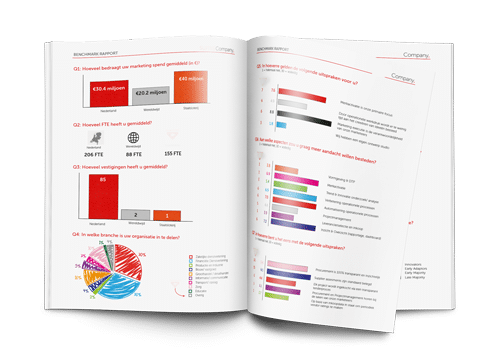
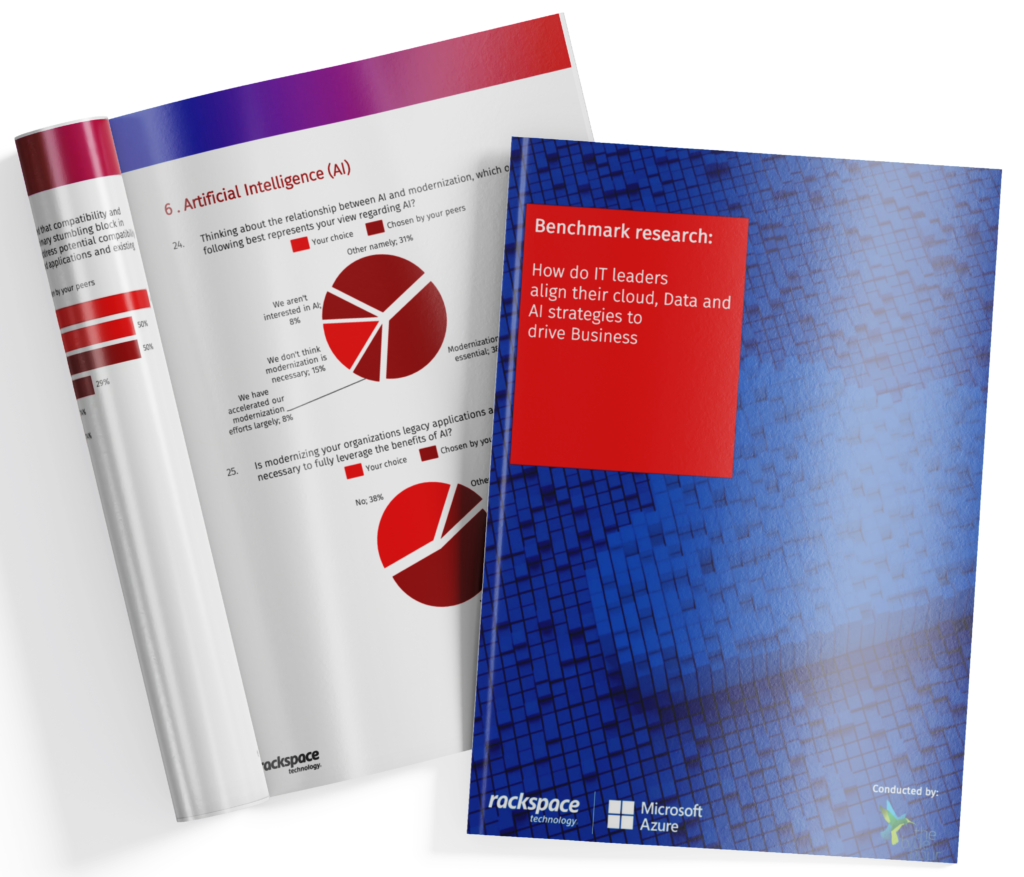
This article is based on the research: “How do IT leaders gain the competitive edge with (Generative) Artificial Intelligence?“. This study is carried out by The Blue Hour from June 2023, targeting C-level executives responsible for IT within multinationals in The Netherlands and the united Kingdom. To date, appointments have been made with over 70 respondents, and 230 contacts are added to the network of Rackspace. All findings are followed up by Rackspace specialists during scheduled meetings.
About Rackspace
Rackspace Technology, a global leader in multicloud solutions with about 6,000 employees and an annual revenue of approximately $3 billion, supports thousands of customers worldwide. Headquartered in San Antonio, Texas, and operating across the Americas, Europe, Asia, and Australia, Rackspace provides services such as cloud migration, application modernization, and infrastructure management across AWS, Google Cloud, and Microsoft Azure. Known for “Fanatical Support,” Rackspace empowers businesses through innovative, reliable cloud solutions.